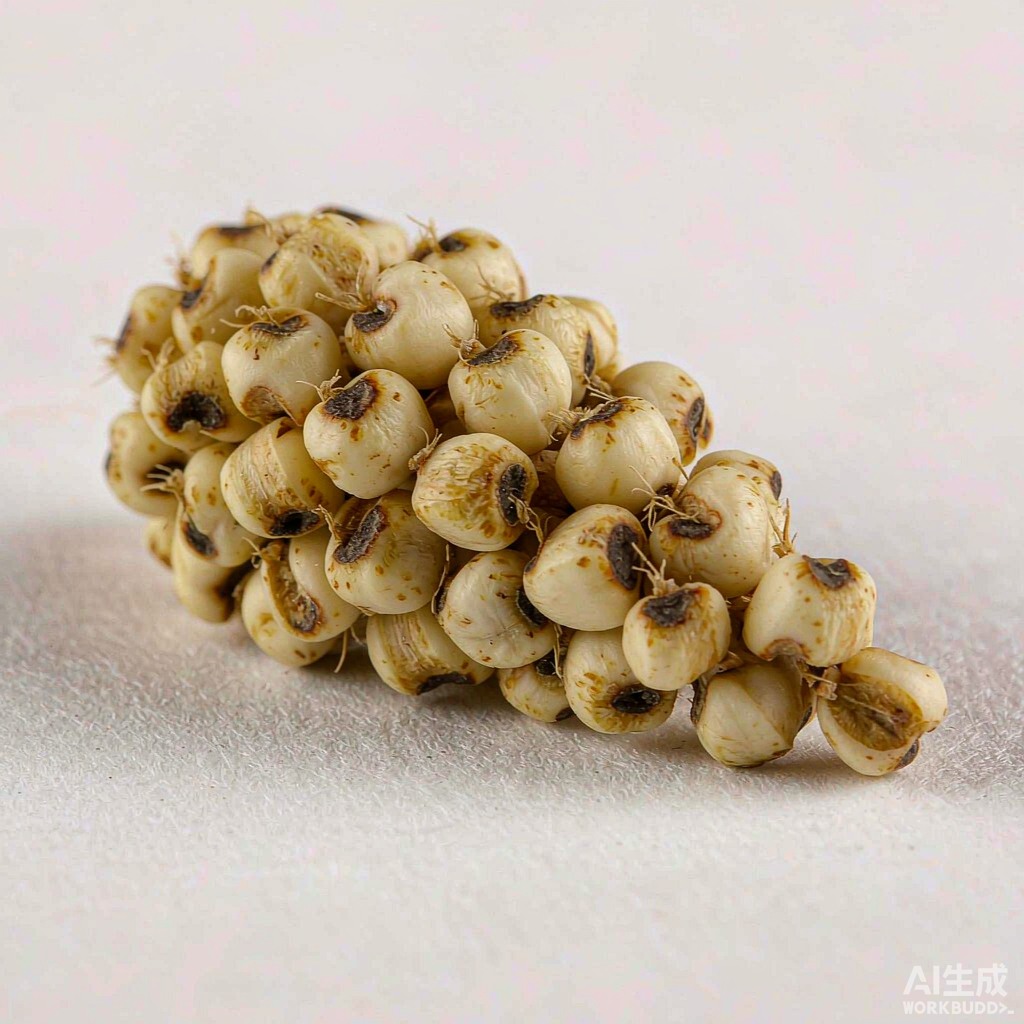
Coix Seed (薏苡仁 yì-yǐ-rén)
Properties & meridians: Sweet (甘 gān) and bland (淡 dàn), cool. Enters the Spleen (脾 pí), Stomach (胃 wèi), and Lungs (肺 fèi) meridians.
Good for pattern: Spleen deficiency with Dampness · Damp-Heat internal accumulation
Properties & meridians: Sweet (甘 gān) and bland (淡 dàn), cool. Enters the Spleen (脾 pí), Stomach (胃 wèi), and Lungs (肺 fèi) meridians.
Good for pattern: Spleen deficiency with Dampness · Damp-Heat internal accumulation
Coix seed strengthens the Spleen and drains Dampness, clears heat and drains pus. For Dampness-heat or phlegm-damp types (yellow sticky discharge, a tendency toward sinus trouble, a yellow greasy tongue coat), the raw seed leans toward clearing and draining — it lightens the load on the nasal passages along the damp-heat route.
You can eat it often (raw is best). If your constitution is cold and you're prone to loose stools, don't take large amounts of the raw seed long-term — dry-fried coix is gentler.
Cook raw coix seed in water or congee; dry-fried coix is milder and better for cold types.
Source: general food-property knowledge (coix seed strengthens the Spleen and drains Dampness); pattern-based nasal care · Spleen deficiency with Dampness / Damp-Heat internal accumulation.
Food therapy is everyday support, not a replacement for professional care. Pregnant women, children, and those with chronic conditions should use it under a practitioner's guidance.
Follow your rhinitis pattern and paired ingredients to other pages on the site.
 Long-press or scan to add